
Je Suis Déjà Venue Ici
2019-2020
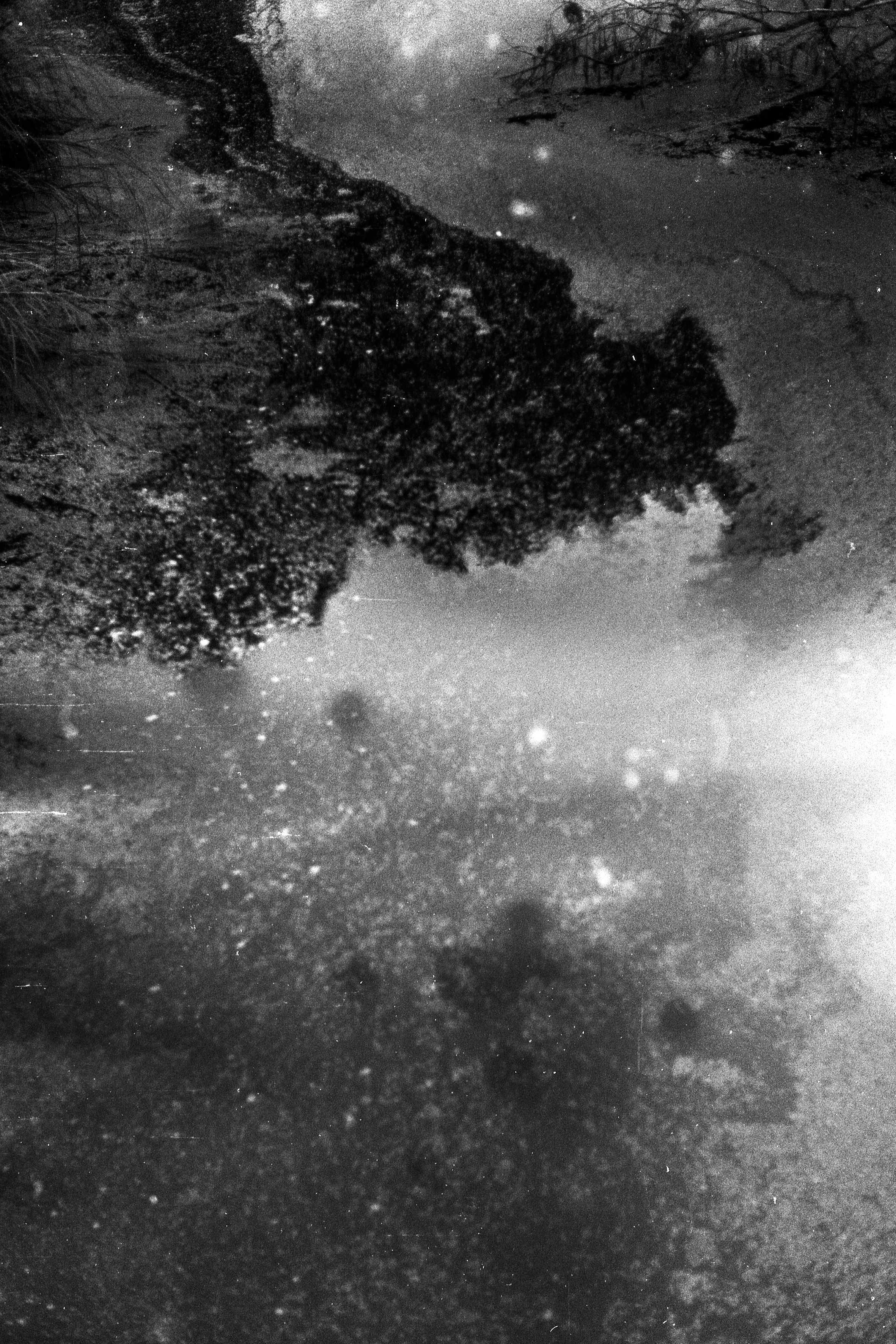
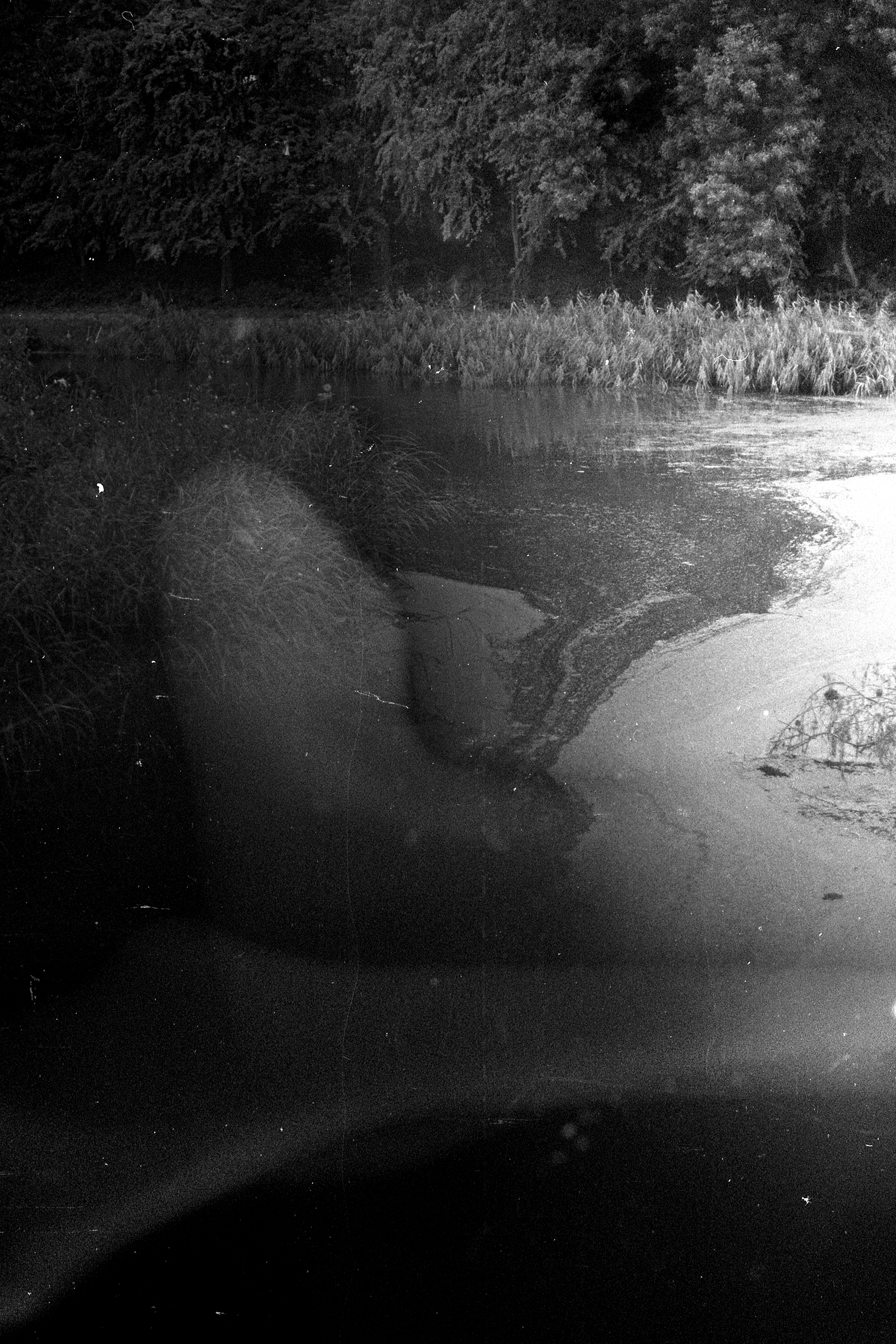
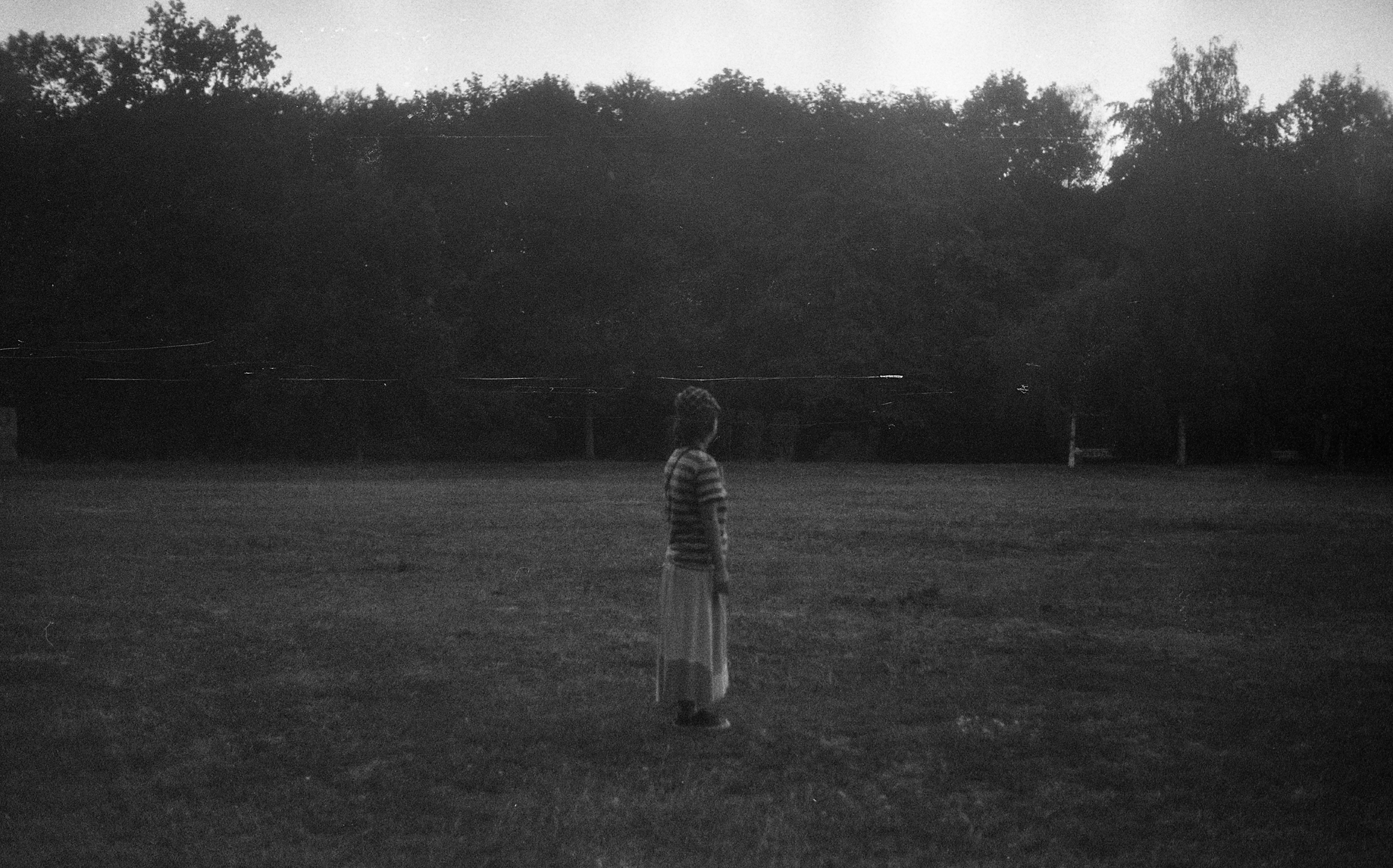
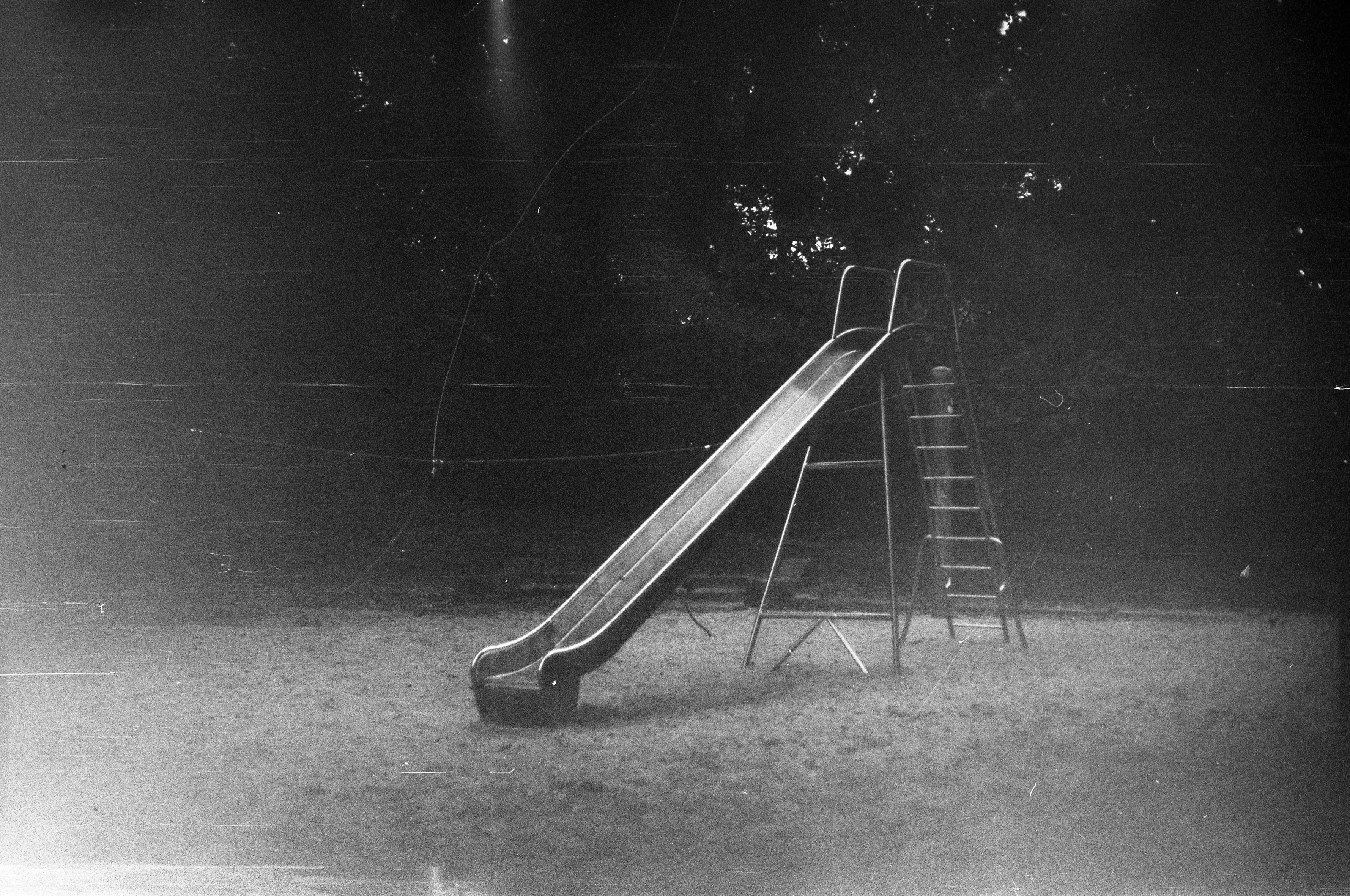
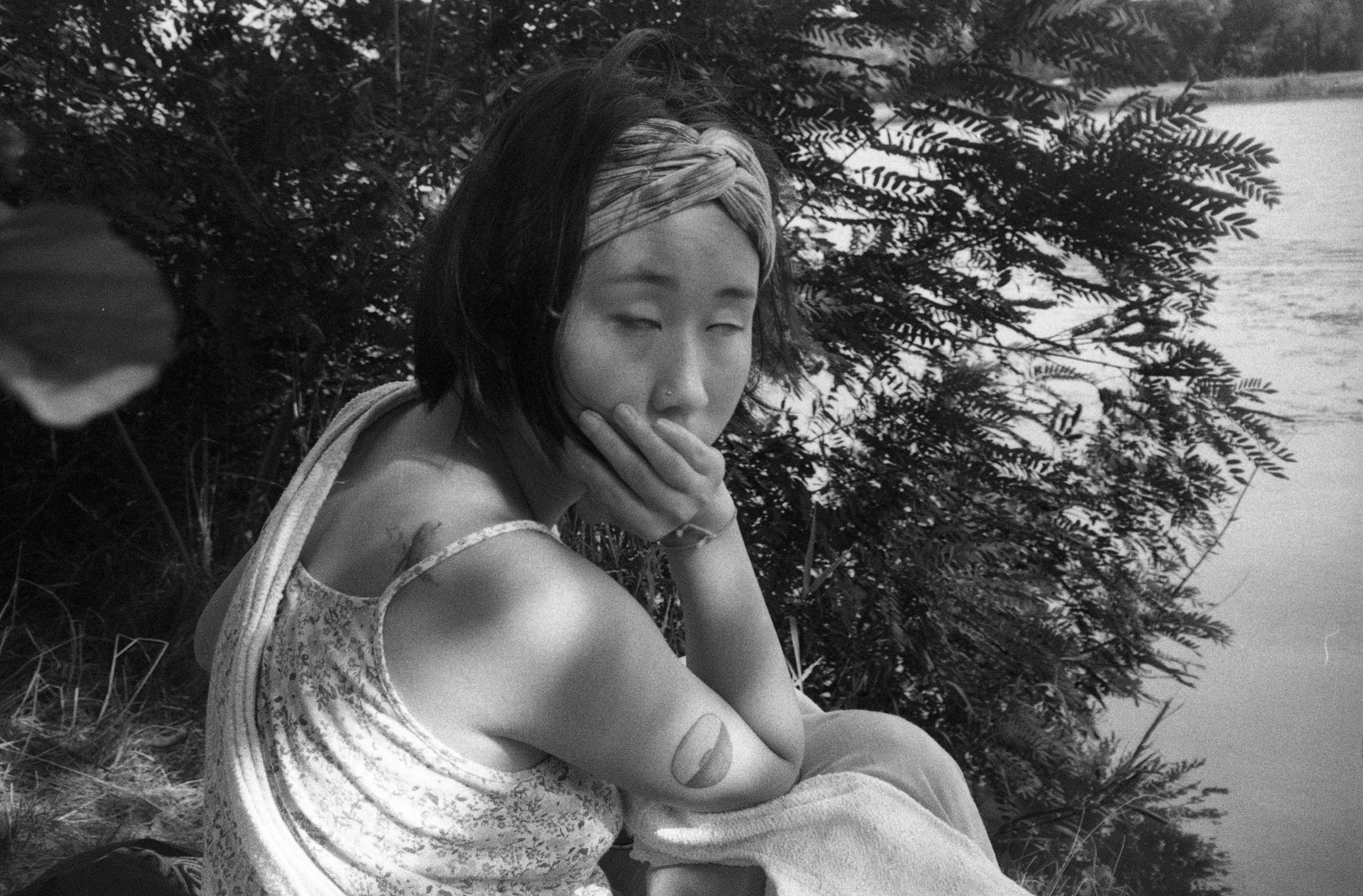
Last summer, my sister and I spent our time wandering around strange places in Berlin. We walked around an unfamiliar lake and played on a solitary swing. These are the scenes I remember from that strange trip.
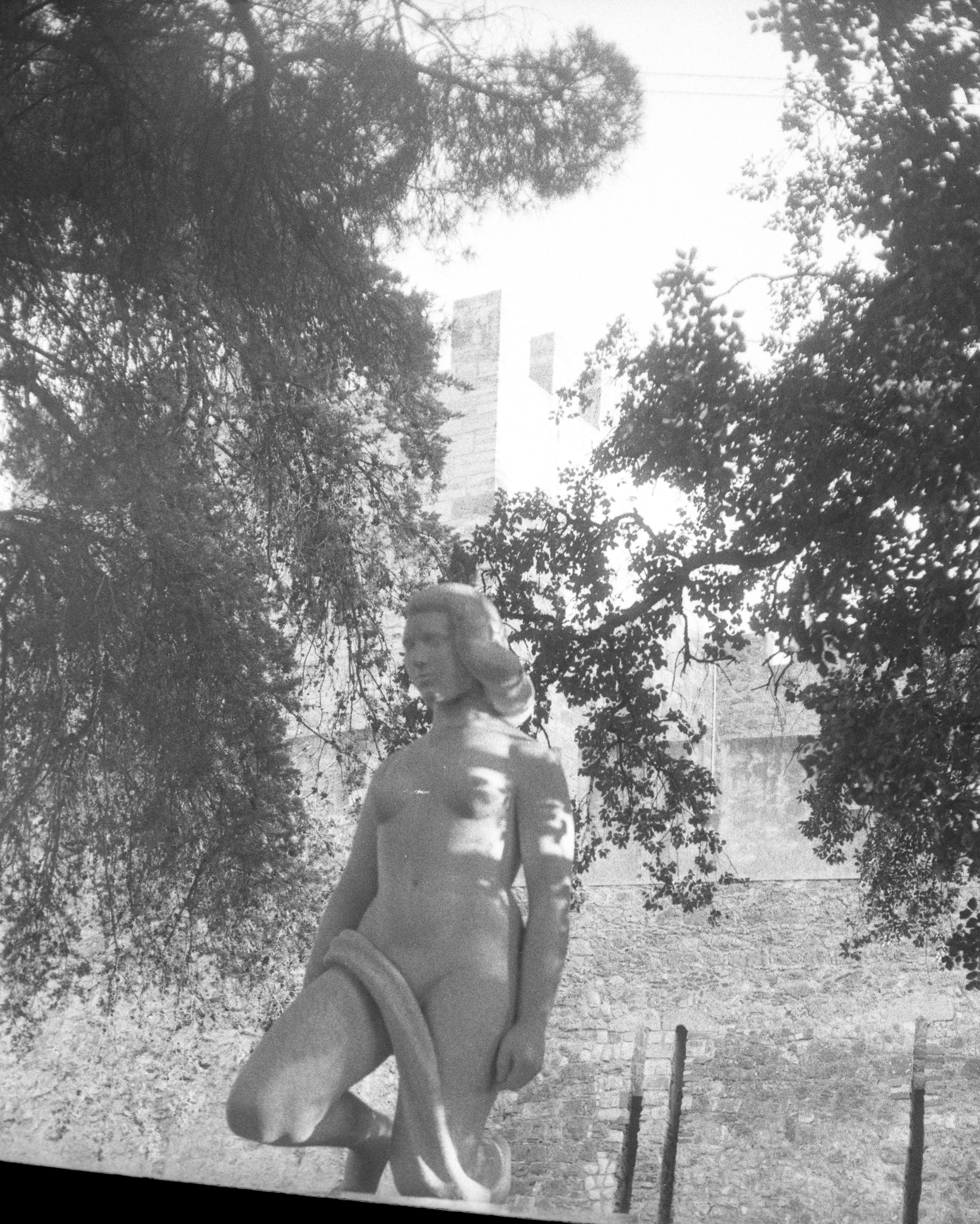
Unexpected events and moments sometimes find me. I immerse myself in the strange situations that arise. And I take pictures to preserve those moments. While shooting and developing the film, accidents happen. My photographs become blurry and hazy, details are missing from the scenes in these images. Everything becomes gray and ash-colored, visually subdued. In addition, many damaged and scratched effects occur on the surface of the film and prints, opening up other possible narratives. Strange and unfamiliar feelings can make us anxious when faced with these images, but I personally feel strangely reassured.
At first glance, it is impossible to pinpoint the time or place. But we have the feeling of having been here before, a sense of déjà vu. We are no longer in the realm of classical photography that captures a scene and arrests time. Instead, we encounter a composition of possible, deferred, and distant times coagulating in the very substance of the image, evoking the movement of the gaze, the wandering of memories, the shifting of narratives, the interplay of memory and forgetting. Scenes and stories that could be imagined and represented indefinitely unfold in these uncertain images.
It is not just about the moment when I took the photograph, but also about the “post-production” stage, the traces and marks obtained during development and printing, and all those that the photograph evokes in the people who look at it. I imagine the memories of others, the places of people who lived before I was born. It's as if I had captured all these moments on my negatives.
In this sense, the technique of film photography (especially black and white, with its quality and richness of grays) is well suited to playing with moments. Film photography requires physical involvement at every stage of the process. When my hands, my eyes, and the passage of time come together in the same space, images slowly appear. In this process, additional elements intervene—removing details and leaving unknown features, whether unintentionally or deliberately. They reveal forms that differ each time. Unstable scenes superimpose themselves upon the reality before the lens at the moment of capture. These effects added to the photograph act as elements that make us feel a kind of strange intimacy. If the first stage is that of discovering the photograph, a second stage of interpretation suggests that this something from elsewhere seems familiar, the situation appearing to the eye as a kind of personal memory, but then comes the third stage, which leaves a singular taste of lost memory. How can something be both intimate and lost at the same time?
We uncover hidden or forgotten memories, or things that no longer exist. Through this, we have distanced ourselves from reality. After a detour into the gray areas of memory, we are back to “impressions of gray.”
The only thing that is certain is that I have been here before.
2019-2020
Last summer, my sister and I spent our time wandering around strange places in Berlin. We walked around an unfamiliar lake and played on a solitary swing. These are the scenes I remember from that strange trip.
Unexpected events and moments sometimes find me. I immerse myself in the strange situations that arise. And I take pictures to preserve those moments. While shooting and developing the film, accidents happen. My photographs become blurry and hazy, details are missing from the scenes in these images. Everything becomes gray and ash-colored, visually subdued. In addition, many damaged and scratched effects occur on the surface of the film and prints, opening up other possible narratives. Strange and unfamiliar feelings can make us anxious when faced with these images, but I personally feel strangely reassured.
At first glance, it is impossible to pinpoint the time or place. But we have the feeling of having been here before, a sense of déjà vu. We are no longer in the realm of classical photography that captures a scene and arrests time. Instead, we encounter a composition of possible, deferred, and distant times coagulating in the very substance of the image, evoking the movement of the gaze, the wandering of memories, the shifting of narratives, the interplay of memory and forgetting. Scenes and stories that could be imagined and represented indefinitely unfold in these uncertain images.
It is not just about the moment when I took the photograph, but also about the “post-production” stage, the traces and marks obtained during development and printing, and all those that the photograph evokes in the people who look at it. I imagine the memories of others, the places of people who lived before I was born. It's as if I had captured all these moments on my negatives.
In this sense, the technique of film photography (especially black and white, with its quality and richness of grays) is well suited to playing with moments. Film photography requires physical involvement at every stage of the process. When my hands, my eyes, and the passage of time come together in the same space, images slowly appear. In this process, additional elements intervene—removing details and leaving unknown features, whether unintentionally or deliberately. They reveal forms that differ each time. Unstable scenes superimpose themselves upon the reality before the lens at the moment of capture. These effects added to the photograph act as elements that make us feel a kind of strange intimacy. If the first stage is that of discovering the photograph, a second stage of interpretation suggests that this something from elsewhere seems familiar, the situation appearing to the eye as a kind of personal memory, but then comes the third stage, which leaves a singular taste of lost memory. How can something be both intimate and lost at the same time?
We uncover hidden or forgotten memories, or things that no longer exist. Through this, we have distanced ourselves from reality. After a detour into the gray areas of memory, we are back to “impressions of gray.”
The only thing that is certain is that I have been here before.